
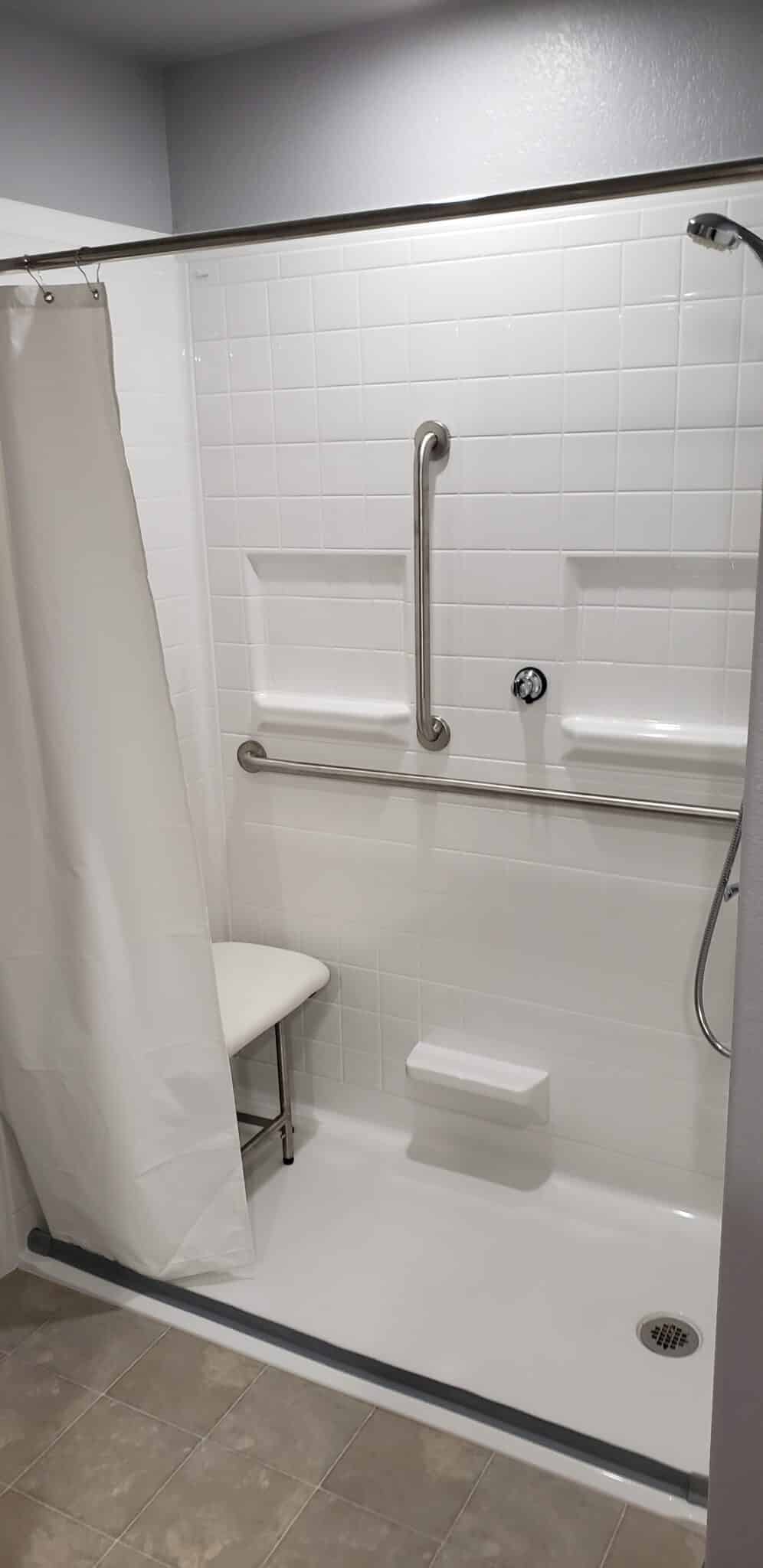
The CDC reports that falls are the leading cause of injury death among adults 65 and older — and the shower or tub is the most dangerous spot in the home. ADA-compliant shower design directly addresses the conditions that cause most of these incidents.
If you are helping a parent plan a bathroom upgrade, or if you are a senior thinking about aging in place, this article will walk you through exactly how ADA roll-in showers reduce fall risk, what the key design features are, and how to evaluate whether a roll-in shower is the right choice for your specific situation.
We will also cover what "ADA compliant" actually means in practice — because there is a meaningful difference between a shower that meets minimum code standards and one that is genuinely designed around real safety and comfort.
Why the Bathroom Is the Most Dangerous Room in the Home for Seniors
Most people think of falls as something that happens outdoors — on stairs, on icy sidewalks, or during outdoor activity. The reality is that for adults over 65, the bathroom accounts for more fall-related injuries than any other room in the home. Wet surfaces, awkward positions, sudden movements, and poorly placed fixtures all contribute.
The shower specifically creates a combination of conditions that stack risk: a wet, slippery floor, a curb or tub wall that requires stepping, the need to balance on one foot, and the disorientation of warm water and steam reducing alertness. For someone whose balance, strength, or reaction time has changed with age, these conditions are genuinely dangerous.
The good news is that most bathroom falls are preventable. They are not random events — they follow predictable patterns tied to specific design failures. ADA roll-in shower design addresses those patterns directly.
Wet and slippery surfaces without adequate traction, high curbs or tub walls requiring lifting the foot, no grab support at entry or transition points, controls placed out of comfortable reach, poor lighting, and narrow entries that require twisting or rushing to enter.
What Makes a Shower "ADA Compliant" — and What That Really Means
ADA stands for the Americans with Disabilities Act. In the context of showers, ADA compliance sets minimum standards for dimensions, entry clearance, grab bar backing, controls placement, and floor slope. These standards were designed primarily for commercial and public facilities, but they have become the baseline reference for accessible residential shower design as well.
Here is what ADA standards require for roll-in showers in residential contexts:
| ADA Requirement | Standard Specification | Why It Matters for Fall Prevention |
|---|---|---|
| Minimum shower size | 36" x 36" (transfer) or 60" x 30" (roll-in) | Enough space to turn, position a wheelchair, or assist a caregiver |
| Entry threshold | ½ inch maximum (ideally flush) | Eliminates the step that causes most shower entry falls |
| Grab bar height | 33–36 inches from floor | Reachable from standing or seated without awkward stretching |
| Seat height | 17–19 inches from floor | Matches a standard chair height for stable seated transfer |
| Controls placement | 38–48 inches from floor, reachable from outside spray | Allows water to be started without stepping into cold spray |
| Floor slope | Maximum 1:48 slope toward drain | Drains water without creating a "tilted floor" sensation underfoot |
| Grab bar wall backing | Structural blocking behind walls | Ensures bars can hold 250+ lbs without pulling out |
It is worth noting that meeting ADA minimums is not the same as designing an optimal shower for a specific person. Real safety comes from combining these standards with thoughtful decisions about how a particular individual moves — where they tend to reach, where they feel unsteady, whether they sit for part or all of the shower, and whether a caregiver assists.
The Four Design Elements That Prevent the Most Falls
1. Barrier-Free or Near-Flush Entry
The moment a senior steps into a shower is the moment of highest fall risk. The combination of balance shift, wet flooring, and the foot lift required to clear a curb creates conditions that trip people up — sometimes literally. A traditional tub curb can be 6–8 inches high. Even a standard shower curb of 3–4 inches requires a significant foot lift for someone with reduced flexibility, weakness in the hips or knees, or any balance deficit.
A true barrier-free roll-in shower eliminates this entirely. The shower floor is continuous with the bathroom floor, with a gentle slope toward the drain. A near-flush design keeps the threshold at half an inch or less — enough to contain water without requiring any meaningful step.
For wheelchair users, a roll-in entry is essential. For seniors who walk independently but have reduced confidence at transitions, even a half-inch bevel can be transformational. The psychological effect of removing that step — the hesitation, the pause, the "am I going to trip?" moment — should not be underestimated.

2. Grab Bars Placed Around Real Movement Patterns
Grab bars are one of the most misunderstood elements of accessible shower design. Many homeowners install them where they look symmetrical, or where a contractor places them by default, rather than where the person actually reaches during real movement. The result is grab bars that are too far from the entry, at the wrong height, or positioned where they get in the way rather than provide support.
Effective grab bar placement starts with understanding the user's movement. The three most important support moments in a shower are:
- Entry and exit: a vertical or angled bar at the entry edge, reachable before the person steps in
- Standing position: a horizontal bar at shoulder height on the dominant side, near where the person stands under the spray
- Seated transition: if the person uses a seat, a bar within reach from the seated position and during the stand-to-sit movement
ADA standards require structural backing behind walls where grab bars may be installed — this is called "blocking." A well-planned shower installs blocking throughout the shower walls even if bars are not added immediately, because needs change and adding bars later without blocking is difficult and expensive.
- Entry bar reachable before stepping in — vertical or angled orientation
- Horizontal bar on dominant side at standing height (33–36")
- Bar within reach from seated position if a seat is planned
- Structural blocking installed throughout walls for future additions
- Bars rated for 250 lbs minimum load — not towel bars or decorative rails
- No sharp edges or ends that could cause injury on contact
3. Floor Traction and Predictable Slope
A shower floor needs to do two things: drain water effectively and feel stable underfoot. These goals can conflict. A steep slope drains faster but creates the sensation of an uneven surface, which reduces confidence and can affect balance. A flat floor holds water and creates slipping risk.
ADA-compliant slope (no more than 1:48, or roughly a quarter inch per foot) is designed to balance both. Combined with a slip-resistant surface — textured acrylic, slip-resistant tile, or a patterned pan — the floor can drain efficiently without feeling unstable.
Surface texture matters significantly. Smooth acrylic or polished tile becomes extremely slippery when wet. Look for shower pans with a coefficient of friction rating of 0.6 or higher when wet — this is the ADA standard for accessible floor surfaces and represents a meaningful difference in real-world grip.
4. Controls Reachable Without Reaching Into the Spray
One common and underappreciated fall scenario: a senior reaches to turn on the shower, gets hit by cold or hot water unexpectedly, flinches or loses balance, and falls. ADA standards require controls to be reachable from outside the main water path — ideally positioned so the user can start the water, adjust temperature, and wait for it to reach the right temperature before stepping fully into the spray zone.
In a roll-in shower layout, this means positioning the valve on the wall near the entry, at a height between 38 and 48 inches, within reach of a person standing at the entry or seated on a bench near the shower opening. A handheld showerhead on a slide bar adds additional flexibility, allowing the user to keep the spray directed away from their body until they are ready.
Roll-In Shower vs Transfer Shower: Which Is Right for Your Situation?
ADA showers come in two main residential configurations. Understanding the difference helps clarify which is the right fit.
| Feature | Roll-In Shower (60"×30" min) | Transfer Shower (36"×36" min) |
|---|---|---|
| Entry style | Fully open, no door required | Usually a fold-down door or curtain |
| Wheelchair access | Full roll-in access supported | Transfer from wheelchair to seat only |
| Caregiver space | Wide enough for side-by-side assistance | Limited — caregiver outside shower |
| Footprint | Typically replaces a standard tub space | Smaller — fits tighter bathrooms |
| Best for | Wheelchairs, walkers, long-term planning | Ambulatory seniors wanting easier entry |
| Seat options | Built-in, fold-down, or freestanding | Built-in seat typically included |
For most aging-in-place planning, a roll-in shower with a 60-inch width is the more future-proof investment. Even if a wheelchair is not needed today, the extra space makes caregiver assistance easier, allows for a fold-down bench that can be used on low-energy days, and creates a layout that accommodates changing needs without requiring another renovation.
The Role of Seating in Fall Prevention
Shower seating is often thought of as a comfort upgrade, but it plays a significant role in fall prevention. Fatigue is a major contributing factor in shower falls — particularly for seniors with cardiovascular conditions, chronic pain, or post-surgical recovery. Standing for 5–10 minutes under warm water is more physically demanding than most people realize, especially when combined with the balance demands of a wet surface.
A fold-down seat in a roll-in shower gives the user the option to sit for part or all of the shower without committing to a full seated bathing setup. The seat folds flat against the wall when not in use, making the shower available for standing use as well.
Key seating decisions for fall prevention:
- Height: 17–19 inches matches ADA standards and allows a stable seated-to-standing transition
- Position: on the wall adjacent to the controls, so controls remain reachable while seated
- Distance from grab bar: a grab bar within 6 inches of the seat edge supports the push-to-stand movement
- Weight rating: ensure the seat and its wall mounting are rated for the user's weight plus dynamic load
Many seniors wait until a fall or a medical event to add a shower seat. Installing one during the initial renovation — even if it is used only occasionally at first — is far less expensive and disruptive than retrofitting later. A fold-down seat adds minimal visual bulk and preserves standing shower use for other household members.
Lighting, Contrast, and Visual Safety in the Shower
Fall prevention is not only about physical design. Visual clarity plays an important role, particularly for seniors experiencing age-related vision changes. Bathrooms are often poorly lit, and steam from a hot shower reduces visibility further.
Practical lighting improvements for senior shower safety:
- Recessed ceiling fixtures directly over the shower, rated for wet locations
- Night lighting in the bathroom that activates automatically — falls happen during nighttime bathroom visits
- Contrasting color between the shower floor and walls helps define the floor boundary and makes the entry threshold visible
- Contrasting grab bar color against wall color makes bars easier to locate quickly
What to Ask Before Buying an ADA Roll-In Shower
Not every shower marketed as "ADA compliant" or "accessible" is genuinely designed for the conditions that cause senior falls. Here are the questions worth asking before committing to a product or installation:
- What is the actual threshold height? (Not "low threshold" — the specific measurement)
- What is the wet coefficient of friction for the pan surface?
- Does the pan include structural blocking for grab bars, or must that be added?
- What is the weight rating for the seat if included?
- Can the controls be positioned to allow use from outside the spray zone?
- Is installation included, and are installers experienced with accessible bathroom design?
- What is the warranty on the pan, wall system, and drain?
DIY vs Professional Installation: What Changes When Accessibility Is the Goal
Many bathroom renovations can be done by a skilled DIYer. ADA roll-in showers introduce additional complexity that makes professional installation strongly advisable in most cases.
The key challenges that require expertise:
- Subfloor modification: achieving a barrier-free threshold often requires lowering the shower drain below the finished floor level, which involves modifying the subfloor and may require a structural assessment
- Linear or perimeter drains: these require precise slope calculation across the full floor area to ensure water drains without pooling
- Blocking installation: structural blocking for grab bars needs to be installed at the right height within the wall cavity before the wall is closed — this is nearly impossible to retrofit without opening the wall
- Waterproofing: a shower with no curb relies entirely on the waterproofing membrane to contain water — any failure leads to subfloor damage, mold, and a full redo
Our White Glove Installation service is specifically designed for accessible bathroom projects. Our installers are factory certified and experienced with barrier-free shower builds, subfloor modification, and blocking installation. Most projects are completed in a single day.
The Long-Term Value of Getting This Right the First Time
Bathroom renovations are disruptive. Most homeowners do them once and expect the result to last a decade or more. When accessibility is the goal, getting the design right the first time matters even more than it does in a standard renovation — because the cost of doing it over is not just financial. A second renovation means more disruption, more time without a functional shower, and more stress for the senior using it.
The decisions that are hardest to change after installation are the ones worth the most careful attention before you begin: the entry style and threshold height, the drain type and location, the subfloor modification for barrier-free entry, and the blocking for future grab bars. Everything else — the wall finish, the fixture style, the seat type — can be upgraded over time at relatively low cost.
If you are planning a shower for a senior parent and you are not sure whether to go full barrier-free or low threshold, the practical answer is almost always: plan for more accessibility than you think you need today. A roll-in shower that serves a mobile 70-year-old equally well is a better long-term investment than a standard shower that works fine for five years and then requires another renovation.
ADA roll-in showers reduce fall risk by eliminating the entry step, providing stable footing, placing grab support at real movement points, and positioning controls for safe use. For most aging-in-place scenarios, a properly designed roll-in shower is the single most impactful bathroom upgrade available. The goal is not to design a medical-looking space — it is to design a shower that feels genuinely safe and comfortable every day, for as long as the person lives in the home.
Ready to Talk Through Your Options?
We help families compare ADA roll-in showers, low threshold designs, and accessible bathing options nationwide. No pressure — just clear guidance based on your space and routine.
Get a Free Consultation → Or call us: 1-888-779-2284 (BATH)How to Apply the Standard Without Overstating It
The ADA shower provisions are precise, but they apply within a broader legal and design context. A private homeowner can borrow useful dimensions and reach principles without claiming the bathroom is legally ADA compliant. When compliance is required for a covered facility, confirm the entire route, clearances, fixtures, controls, supports, and current local requirements with qualified professionals.
Before ordering, compare the seller’s finished dimensions and threshold details with sections 608 through 610 of the 2010 ADA Standards. Keep product instructions and photographs of wall reinforcement. Verify the clear opening after finishes are installed. A nominal size on a product page is not a substitute for completed clear dimensions.
The safest wording is specific: describe a low threshold, reinforcement, reachable controls, a seat, or a handheld spray when those features are present. Reserve “ADA compliant” for a verified installed configuration. This protects the buyer from assuming that one labeled component determines the performance of the whole bathroom.