Observe
Watch the current routine. Record difficult movements, reach problems, fatigue, and where help is needed.

A rolling shower chair can reduce repeated transfers, but it must fit the user, doorway, approach route, shower entrance, turning area, caregiver method, and toilet if commode use is intended. Measure the complete path before buying.
Measure the full room and approach path. Verify current specifications. Coordinate entry, water control, seating, support, and reach before ordering.
Open the measurement guide →Trace the complete chair route before comparing product features.
A rolling shower chair can reduce repeated transfers, but it must fit the user, doorway, approach route, shower entrance, turning area, caregiver method, and toilet if commode use is intended. Measure the complete path before buying.
This guide is for families and caregivers researching wheeled shower and commode chairs. It uses plain language, real planning questions, and current primary references. It does not assume that one product, threshold, or layout is best for every user.
A mobile shower chair supports seated transport into an accessible bathing area. Some models also function over a toilet or use a removable pail. It does not remove the need for trained transfers, brakes, clear routes, or a shower designed to accept the chair.
For rolling shower chair, this detail should be confirmed in the context of the complete bathroom. The finished result depends on the selected model, the existing structure, plumbing, floor elevations, installer method, and the person’s movement. Product names and nominal dimensions cannot replace that review.
Write the decision into the project scope. Include the exact model or performance requirement, who verifies it, and when it is checked. That simple discipline helps families compare proposals and gives the installer a clear target.
What could change about this decision if balance, strength, mobility equipment, or caregiver involvement changes during the next few years?
Measure the chair’s overall width, not only seat width. Check bedroom paths, hallway turns, bathroom door clear opening, thresholds, toilet approach, shower entry, and turning room. Include footrests, armrests, handles, and caregiver position.
For rolling shower chair, this detail should be confirmed in the context of the complete bathroom. The finished result depends on the selected model, the existing structure, plumbing, floor elevations, installer method, and the person’s movement. Product names and nominal dimensions cannot replace that review.
Write the decision into the project scope. Include the exact model or performance requirement, who verifies it, and when it is checked. That simple discipline helps families compare proposals and gives the installer a clear target.
What could change about this decision if balance, strength, mobility equipment, or caregiver involvement changes during the next few years?
Seat width, depth, opening shape, back support, foot support, arm configuration, and pressure management should match the user. A chair that is technically rated for a person may still be uncomfortable or poorly positioned. Seek clinical guidance for complex posture or skin concerns.
For rolling shower chair, this detail should be confirmed in the context of the complete bathroom. The finished result depends on the selected model, the existing structure, plumbing, floor elevations, installer method, and the person’s movement. Product names and nominal dimensions cannot replace that review.
Write the decision into the project scope. Include the exact model or performance requirement, who verifies it, and when it is checked. That simple discipline helps families compare proposals and gives the installer a clear target.
What could change about this decision if balance, strength, mobility equipment, or caregiver involvement changes during the next few years?
Small casters maneuver differently from larger wheels. Brakes must be reachable and hold on the intended surface. Check wheel material, bearings, hair and debris accumulation, corrosion resistance, and whether all wheels lock or only selected casters.
For rolling shower chair, this detail should be confirmed in the context of the complete bathroom. The finished result depends on the selected model, the existing structure, plumbing, floor elevations, installer method, and the person’s movement. Product names and nominal dimensions cannot replace that review.
Write the decision into the project scope. Include the exact model or performance requirement, who verifies it, and when it is checked. That simple discipline helps families compare proposals and gives the installer a clear target.
What could change about this decision if balance, strength, mobility equipment, or caregiver involvement changes during the next few years?
Attendant models use caregiver push handles. Self-propelled versions may have larger rear wheels, increasing overall width and changing shower clearance. Choose based on strength, reach, control, route width, and whether wet hands affect propulsion.
For rolling shower chair, this detail should be confirmed in the context of the complete bathroom. The finished result depends on the selected model, the existing structure, plumbing, floor elevations, installer method, and the person’s movement. Product names and nominal dimensions cannot replace that review.
Write the decision into the project scope. Include the exact model or performance requirement, who verifies it, and when it is checked. That simple discipline helps families compare proposals and gives the installer a clear target.
What could change about this decision if balance, strength, mobility equipment, or caregiver involvement changes during the next few years?
A shower commode chair may roll over a compatible toilet or use a collection pan. Verify seat height, toilet height, bowl clearance, rear access, splash guard, pan removal, and cleaning procedure. Bathroom geometry often determines whether this feature is practical.
For rolling shower chair, this detail should be confirmed in the context of the complete bathroom. The finished result depends on the selected model, the existing structure, plumbing, floor elevations, installer method, and the person’s movement. Product names and nominal dimensions cannot replace that review.
Write the decision into the project scope. Include the exact model or performance requirement, who verifies it, and when it is checked. That simple discipline helps families compare proposals and gives the installer a clear target.
What could change about this decision if balance, strength, mobility equipment, or caregiver involvement changes during the next few years?
Swing-away or removable footrests can clear transfers, but they must be repositioned before transport. Feet should not drag. Armrests may support positioning yet interfere with lateral transfer unless removable or flip-back. Follow the chair’s instructions and care plan.
For rolling shower chair, this detail should be confirmed in the context of the complete bathroom. The finished result depends on the selected model, the existing structure, plumbing, floor elevations, installer method, and the person’s movement. Product names and nominal dimensions cannot replace that review.
Write the decision into the project scope. Include the exact model or performance requirement, who verifies it, and when it is checked. That simple discipline helps families compare proposals and gives the installer a clear target.
What could change about this decision if balance, strength, mobility equipment, or caregiver involvement changes during the next few years?
Even a small curb can stop a caster or destabilize the chair. The shower needs sufficient entry width, floor strength, slope, traction, drainage, and maneuvering room. Water retainers and curtains should not catch wheels or interfere with the caregiver.
For rolling shower chair, this detail should be confirmed in the context of the complete bathroom. The finished result depends on the selected model, the existing structure, plumbing, floor elevations, installer method, and the person’s movement. Product names and nominal dimensions cannot replace that review.
Write the decision into the project scope. Include the exact model or performance requirement, who verifies it, and when it is checked. That simple discipline helps families compare proposals and gives the installer a clear target.
What could change about this decision if balance, strength, mobility equipment, or caregiver involvement changes during the next few years?
Pushing, turning, braking, and positioning a wet chair can strain a caregiver. The route should minimize tight pivots and pulling backward. Training from an occupational or physical therapist can identify safer transfer and handling methods for the specific household.
For rolling shower chair, this detail should be confirmed in the context of the complete bathroom. The finished result depends on the selected model, the existing structure, plumbing, floor elevations, installer method, and the person’s movement. Product names and nominal dimensions cannot replace that review.
Write the decision into the project scope. Include the exact model or performance requirement, who verifies it, and when it is checked. That simple discipline helps families compare proposals and gives the installer a clear target.
What could change about this decision if balance, strength, mobility equipment, or caregiver involvement changes during the next few years?
Clean the frame, seat opening, pan, wheels, brakes, and joints according to the manufacturer’s directions. Allow parts to dry. Inspect upholstery, welds, fasteners, tires, and rust. Shared equipment may require a formal disinfection protocol.
For rolling shower chair, this detail should be confirmed in the context of the complete bathroom. The finished result depends on the selected model, the existing structure, plumbing, floor elevations, installer method, and the person’s movement. Product names and nominal dimensions cannot replace that review.
Write the decision into the project scope. Include the exact model or performance requirement, who verifies it, and when it is checked. That simple discipline helps families compare proposals and gives the installer a clear target.
What could change about this decision if balance, strength, mobility equipment, or caregiver involvement changes during the next few years?
Ask for overall dimensions, seat dimensions, turning radius, user capacity, chair weight, brake type, replacement parts, toilet clearance, warranty, and return policy. Confirm whether assembly or adjustment is required and who can service the chair locally.
For rolling shower chair, this detail should be confirmed in the context of the complete bathroom. The finished result depends on the selected model, the existing structure, plumbing, floor elevations, installer method, and the person’s movement. Product names and nominal dimensions cannot replace that review.
Write the decision into the project scope. Include the exact model or performance requirement, who verifies it, and when it is checked. That simple discipline helps families compare proposals and gives the installer a clear target.
What could change about this decision if balance, strength, mobility equipment, or caregiver involvement changes during the next few years?
Product pages are useful for identifying sizes and components, but they cannot see the bathroom or the person using it. Use the following sequence to turn online research into a sound plan.
Watch the current routine. Record difficult movements, reach problems, fatigue, and where help is needed.
Document the room, approach route, finished opening, drain, plumbing wall, door, fixtures, and floor transitions.
Compare shower type, threshold, seating, supports, controls, enclosure, and drainage with those observations.
Confirm exact models, written scope, installation instructions, code requirements, freight, and warranty responsibilities.
| Item | What to verify | Why it matters |
|---|---|---|
| Shower base | Exact model, finished size, threshold, drain, support | Controls fit, entry, and water movement |
| Walls | Panel or tile system, backing, seams, penetrations | Affects waterproofing and accessory mounting |
| Plumbing | Valve, supply lines, drain, trap, vent, permits | Prevents hidden omissions in a quote |
| Accessibility | Seat, bars, controls, clear floor area, approach | The room works as a connected system |
| Completion | Trim, paint, flooring repair, cleanup, inspection | Defines what “finished” actually includes |
Important: ADA criteria may be useful design references in a home, but legal applicability depends on the property and project. Product names do not establish compliance. Verify required work with the authority having jurisdiction and qualified professionals.
Families and caregivers researching wheeled shower and commode chairs benefit from a written plan because the most expensive mistakes usually happen where products meet the room. The examples below show how to pressure-test a decision without pretending that one layout fits everyone.
Imagine this decision in a real home. The bathroom has fixed walls, existing plumbing, limited maneuvering space, and a person whose strength and balance may vary from day to day. Start by identifying the movement that causes difficulty. Then separate what the product itself solves from what must be handled by installation, room layout, or caregiver technique.
For rolling shower chair, write down the evidence needed before choosing: measurements, photographs, model specifications, installation instructions, and a clear description of the user’s routine. This prevents a familiar mistake—selecting a feature because it sounds accessible without confirming that it works in the finished room.
Finally, test the proposed sequence in plain language. How does the person enter? Where do hands go? When is the water started? Where are soap and towels? How does the person turn, sit, stand, and leave? If an answer depends on an awkward reach or an unsecured surface, revise the plan before ordering.
Imagine this decision in a real home. The bathroom has fixed walls, existing plumbing, limited maneuvering space, and a person whose strength and balance may vary from day to day. Start by identifying the movement that causes difficulty. Then separate what the product itself solves from what must be handled by installation, room layout, or caregiver technique.
For rolling shower chair, write down the evidence needed before choosing: measurements, photographs, model specifications, installation instructions, and a clear description of the user’s routine. This prevents a familiar mistake—selecting a feature because it sounds accessible without confirming that it works in the finished room.
Finally, test the proposed sequence in plain language. How does the person enter? Where do hands go? When is the water started? Where are soap and towels? How does the person turn, sit, stand, and leave? If an answer depends on an awkward reach or an unsecured surface, revise the plan before ordering.
Imagine this decision in a real home. The bathroom has fixed walls, existing plumbing, limited maneuvering space, and a person whose strength and balance may vary from day to day. Start by identifying the movement that causes difficulty. Then separate what the product itself solves from what must be handled by installation, room layout, or caregiver technique.
For rolling shower chair, write down the evidence needed before choosing: measurements, photographs, model specifications, installation instructions, and a clear description of the user’s routine. This prevents a familiar mistake—selecting a feature because it sounds accessible without confirming that it works in the finished room.
Finally, test the proposed sequence in plain language. How does the person enter? Where do hands go? When is the water started? Where are soap and towels? How does the person turn, sit, stand, and leave? If an answer depends on an awkward reach or an unsecured surface, revise the plan before ordering.
Imagine this decision in a real home. The bathroom has fixed walls, existing plumbing, limited maneuvering space, and a person whose strength and balance may vary from day to day. Start by identifying the movement that causes difficulty. Then separate what the product itself solves from what must be handled by installation, room layout, or caregiver technique.
For rolling shower chair, write down the evidence needed before choosing: measurements, photographs, model specifications, installation instructions, and a clear description of the user’s routine. This prevents a familiar mistake—selecting a feature because it sounds accessible without confirming that it works in the finished room.
Finally, test the proposed sequence in plain language. How does the person enter? Where do hands go? When is the water started? Where are soap and towels? How does the person turn, sit, stand, and leave? If an answer depends on an awkward reach or an unsecured surface, revise the plan before ordering.
Imagine this decision in a real home. The bathroom has fixed walls, existing plumbing, limited maneuvering space, and a person whose strength and balance may vary from day to day. Start by identifying the movement that causes difficulty. Then separate what the product itself solves from what must be handled by installation, room layout, or caregiver technique.
For rolling shower chair, write down the evidence needed before choosing: measurements, photographs, model specifications, installation instructions, and a clear description of the user’s routine. This prevents a familiar mistake—selecting a feature because it sounds accessible without confirming that it works in the finished room.
Finally, test the proposed sequence in plain language. How does the person enter? Where do hands go? When is the water started? Where are soap and towels? How does the person turn, sit, stand, and leave? If an answer depends on an awkward reach or an unsecured surface, revise the plan before ordering.
Imagine this decision in a real home. The bathroom has fixed walls, existing plumbing, limited maneuvering space, and a person whose strength and balance may vary from day to day. Start by identifying the movement that causes difficulty. Then separate what the product itself solves from what must be handled by installation, room layout, or caregiver technique.
For rolling shower chair, write down the evidence needed before choosing: measurements, photographs, model specifications, installation instructions, and a clear description of the user’s routine. This prevents a familiar mistake—selecting a feature because it sounds accessible without confirming that it works in the finished room.
Finally, test the proposed sequence in plain language. How does the person enter? Where do hands go? When is the water started? Where are soap and towels? How does the person turn, sit, stand, and leave? If an answer depends on an awkward reach or an unsecured surface, revise the plan before ordering.
A useful proposal identifies the exact shower model and accessories, not a generic allowance. It explains demolition, substrate preparation, base support, drain and valve work, wall installation, accessory mounting, finish repairs, permits, cleanup, and inspection. It also names exclusions and describes how concealed damage is handled.
Ask who owns each warranty. A manufacturer may cover the product while the installer covers labor. Freight damage, incorrect measurements, and field modifications may be treated differently. Keep order confirmations, specifications, photographs, and final care instructions together.
Do not let a fast schedule replace due diligence. Speed can be valuable when an older adult has only one bathroom, but correct fit and water management are more important than a slogan. A realistic schedule begins after measurements, product availability, site conditions, and the scope have been confirmed.
Online listings are starting points. Dimensions may be nominal, images may show optional accessories, and finish or drain choices may change. Open the live seller page before purchase. Confirm the current title, selected variant, included components, freight terms, and installation documentation. If information conflicts, contact the seller or manufacturer before ordering.
The products shown on this site are examples linked to Showers4Less. ShowersForElderly.com does not claim that every product fits every person, room, code, or funding program. Selection and installation should be based on verified specifications and the project’s real conditions.
These examples link directly to current Showers4Less listings. Verify dimensions, configuration, included components, freight, and availability on the live product page before ordering.

A 42 × 36-inch multi-piece shower package. Review the live listing for included walls, accessories, drain configuration, finish, and current availability.
View details & buy now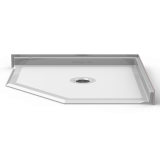
A 42 × 42-inch corner barrier-free shower base. Confirm the threshold profile, drain position, rough opening, and installation instructions before ordering.
View details & buy now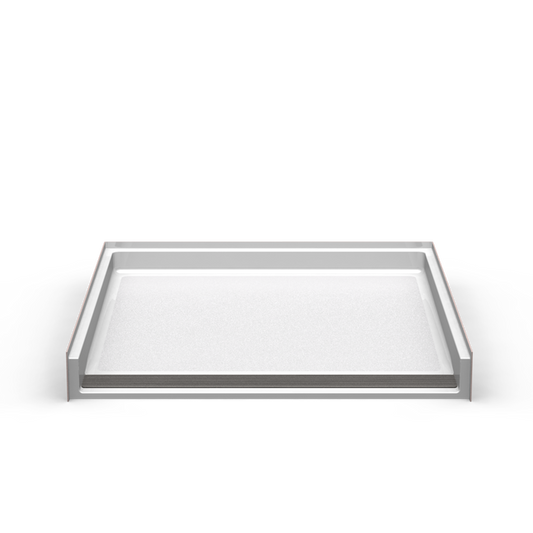
A 45 × 50-inch barrier-free shower base. Confirm the threshold profile, drain position, rough opening, and installation instructions before ordering.
View details & buy now
A 48 × 34-inch barrier-free shower base. Confirm the threshold profile, drain position, rough opening, and installation instructions before ordering.
View details & buy now
A 48 × 36-inch barrier-free shower base. Confirm the threshold profile, drain position, rough opening, and installation instructions before ordering.
View details & buy now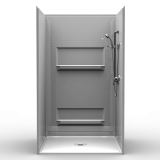
A 48 × 48-inch multi-piece shower package. Review the live listing for included walls, accessories, drain configuration, finish, and current availability.
View details & buy nowUse primary sources for requirements and current public-health guidance. A seller or planning website should not be the final authority for legal compliance.
Start with the user’s routine and accurate room measurements. Identify the difficult movement, document the route and opening, and only then compare product sizes and features.
No. Compliance applies to the complete installed space and depends on the applicable rules. A pan, seat, or grab bar cannot establish compliance by itself.
One-day installation may be available for qualifying projects using coordinated systems. Site conditions, permits, plumbing, product readiness, and concealed damage can extend the schedule.
Many systems can be freight shipped. Confirm the exact model, receiving plan, damage inspection, storage, instructions, and installer capability before ordering.
Measure the finished opening, depth, height, door and fixture clearances, approach route, floor transition, plumbing wall, and drain location. Take several width measurements because walls may not be square.
Compare the complete scope: product, freight, demolition, plumbing, substrate, installation, accessories, permits, finish repairs, cleanup, and warranties.
Grab bars can help when correctly placed and structurally mounted, but entry, traction, seating, reach, lighting, and drainage also affect the routine.
Use the U.S. Department of Justice 2010 ADA Standards, especially sections 608 through 610, and consult the applicable code authority or design professional for the project.
Share a few practical details. We can help narrow the product type, measurements, and installation path. No private medical information is needed.
Call 1-888-779-2284