
Shower Options That Work Well for Elderly Adults and Seniors
When people search “showers for elderly” they usually mean one thing: a shower that is easier to enter, easier to use, and easier to maintain, especially as mobility changes over time. The best solution depends on how you move today, how you expect to move in a year, and how much space your bathroom gives you to work with.
1) Roll In Showers for Seniors (Barrier Free or Near-Flush Entry)
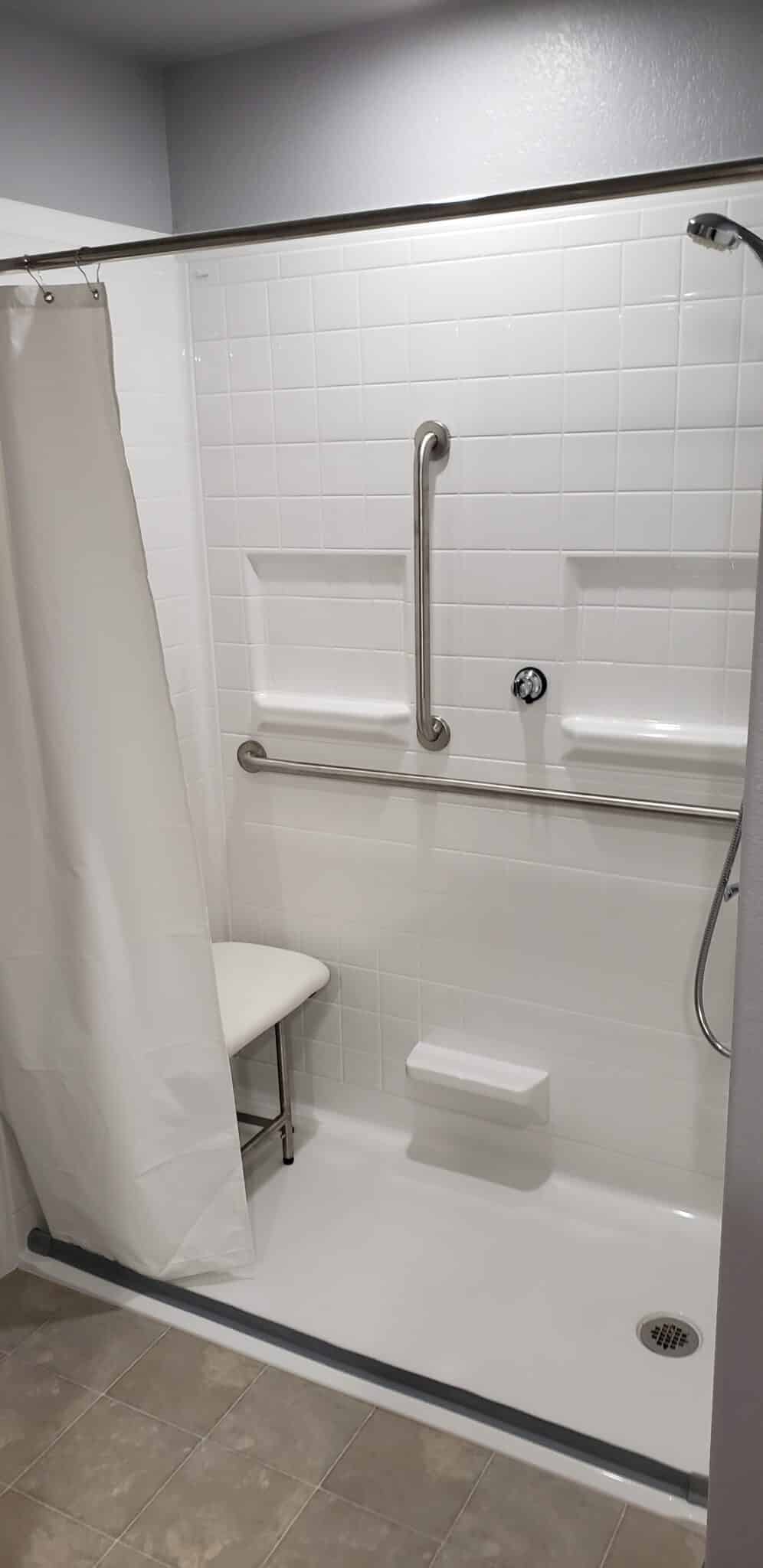
A roll in shower is designed to reduce or remove the step at the shower entrance. That matters because the entry is where many people feel the most uncertainty. A true barrier free shower can be built to align with the bathroom floor. A near-flush design uses a small bevel or subtle threshold that still feels smooth underfoot.
Roll in showers for elderly adults also make caregiving easier. If a spouse or caregiver helps, a wider entry and open layout provides room for assistance without awkward turning or leaning.
- Best for: wheelchairs, walkers, long-term aging in place planning, caregiver assistance.
- Common features: trench drains, wider pans, seating options, reinforced wall backing for grab bars.
- Comfort benefit: less fear around stepping in, more predictable movement.
2) Low Threshold Showers (Easier Step, Traditional Look)
A low threshold shower keeps the familiar feel of a standard shower while reducing the step height. Many seniors prefer this style because it looks like a normal shower, while still offering a noticeably easier entry than a tub or tall curb.
If you do not need wheelchair roll in access today, a low threshold shower can be a strong balance of comfort, looks, and cost. It can also be combined with a well-planned seat and grab bar layout so the shower supports steadier movement.
- Best for: seniors who want an easier step without fully removing the threshold.
- Common features: beveled pans, slip-resistant floors, clean wall systems, simple upgrades.
- Comfort benefit: feels familiar, reduces hesitation at the entry.

If you are selecting a shower for an elderly parent and you are unsure about future mobility, lean toward a layout that gives more flexibility. A roll in shower footprint with thoughtful seating can serve many different routines over time, even if mobility changes.
Planning Guide: How to Choose the Right Shower for Elderly Needs
A successful senior shower design is not just about buying a “nice shower kit.” It comes down to fit, layout, support points, and how the person actually showers. This guide walks you through the decisions that matter most so you can choose confidently.
Step 1: Clarify mobility today (and likely mobility later)
Start with reality. Does the person use a cane, walker, or wheelchair? Do they hold onto walls for stability? Do they need to sit to shower, or do they tire quickly while standing?
Even if mobility devices are not used today, planning for easier entry can reduce stress and support aging in place.
- Can the person lift a foot comfortably over a 4–5 inch curb?
- Is turning around inside the shower difficult?
- Does a caregiver assist with bathing now or possibly later?
Step 2: Choose the right pan style and drain location
Shower pans matter more than most people expect. The pan dictates the entry feel, the traction, and the water path. Drain location affects where water gathers and where people prefer to stand or sit.
- Trench drains: popular for roll in layouts and wide entries.
- Center drains: common and versatile for many footprints.
- End drains: can align with preferred standing areas, depending on layout.
Step 3: Plan seating and support as part of the design
Seats and grab bars should be planned with the person’s routine in mind. A seat that is too low, too far from controls, or positioned poorly can become frustrating.
- Decide if the person will sit for the full shower or only part of it.
- Consider fold-down seating for shared bathrooms.
- Make sure grab bar locations match real reach and movement patterns.
If you want showers for elderly adults that truly feel better day to day, prioritize these fundamentals: easier entry, reliable footing, predictable water flow, reachable controls, seating that matches energy levels, and support points that feel natural to grab. When those fundamentals are right, the shower can still look modern and stylish.
Sizes, Layout, and Space Planning for Senior Showers
The fastest way to reduce uncertainty is to confirm basic measurements. You do not need to be a contractor. A few simple dimensions can narrow down the best options and avoid ordering the wrong unit.
Common shower sizes for elderly-friendly layouts
Many senior showers fit into the footprint of an existing tub. That is why sizes like 60 inches by 30–34 inches are so common. Larger roll in showers give more room for turning and caregiver support, and bariatric-friendly layouts can be wider still.
You do not need an “oversized bathroom” to improve entry and comfort. The key is selecting the right pan style and layout.
- 60 x 30 / 60 x 32 / 60 x 34: common replacements for tub-to-shower projects.
- 60 x 36: popular comfort upgrade for more elbow room.
- 60 x 48 or 72 x 48: larger roll in showers for caregivers, wheelchairs, or broader movement space.
Turning, entry width, and “real movement space”
A shower can look large on paper but still feel tight if the entry is narrow or the door swing creates awkward movement. For elderly users, the goal is to reduce twisting and rushed stepping. Wider entries and open layouts can make showers feel calmer.
If a wheelchair is involved, the layout should support straightforward entry and positioning, not sharp turns. If a walker is involved, the threshold and floor traction become even more important.

Measure the existing space wall-to-wall where the pan will sit. Note ceiling height, plumbing location (left, right, center), and whether you want the controls reachable from a seated position. Photos help too. If you request a quote, we can guide you through what to capture without overcomplicating it.
| Decision Area | What to Look For | Why It Matters for Elderly Users | Common Mistake to Avoid |
|---|---|---|---|
| Entry height | Barrier free or low threshold | Reduces hesitation at the entry and supports steadier movement | Choosing a curb that feels “fine now” but creates stress later |
| Floor traction | Slip-resistant surface + predictable slope | Helps maintain footing when water is on the floor | Prioritizing appearance over traction and slope quality |
| Seating | Fold-down, built-in, or freestanding seat | Supports energy levels and comfort for longer showers | Placing a seat where it blocks movement or is far from controls |
| Grab bar layout | Backing where support is needed | Support points reduce reliance on walls and fixtures | Installing bars where they look symmetrical, not where they are used |
| Controls | Reachable from entry and from seat | Reduces stretching and awkward turning | Controls placed too far from where the person stands or sits |
| Cleaning | Easy-clean walls, minimal grout, reachable shelves | Reduces strain and simplifies maintenance | Designing a shower that is difficult to maintain long-term |
Roll In Shower vs Walk In Tub for Elderly Comfort
Many families compare a senior shower upgrade with a walk in tub. Both can be excellent. The best choice comes down to routine, energy level, bathroom space, and whether the person prefers standing, sitting, or soaking.
When a roll in shower is often the better fit
Roll in showers tend to work well for people who want a faster routine, need caregiver assistance, or want a layout that adapts as mobility changes. They are also popular for families who want a shower that can be used by multiple generations without feeling unusual.
- Better for wheelchairs, walkers, and caregiver space
- Often simpler for daily routines and regular schedules
- Supports seated showering with a well-planned seat
- Can be designed to feel like a spa shower, not a medical fixture
If you are looking for ADA-friendly shower products, you can also review options on AgingSafelyBaths.com handicap and ADA showers.
When a walk in tub may be the better fit
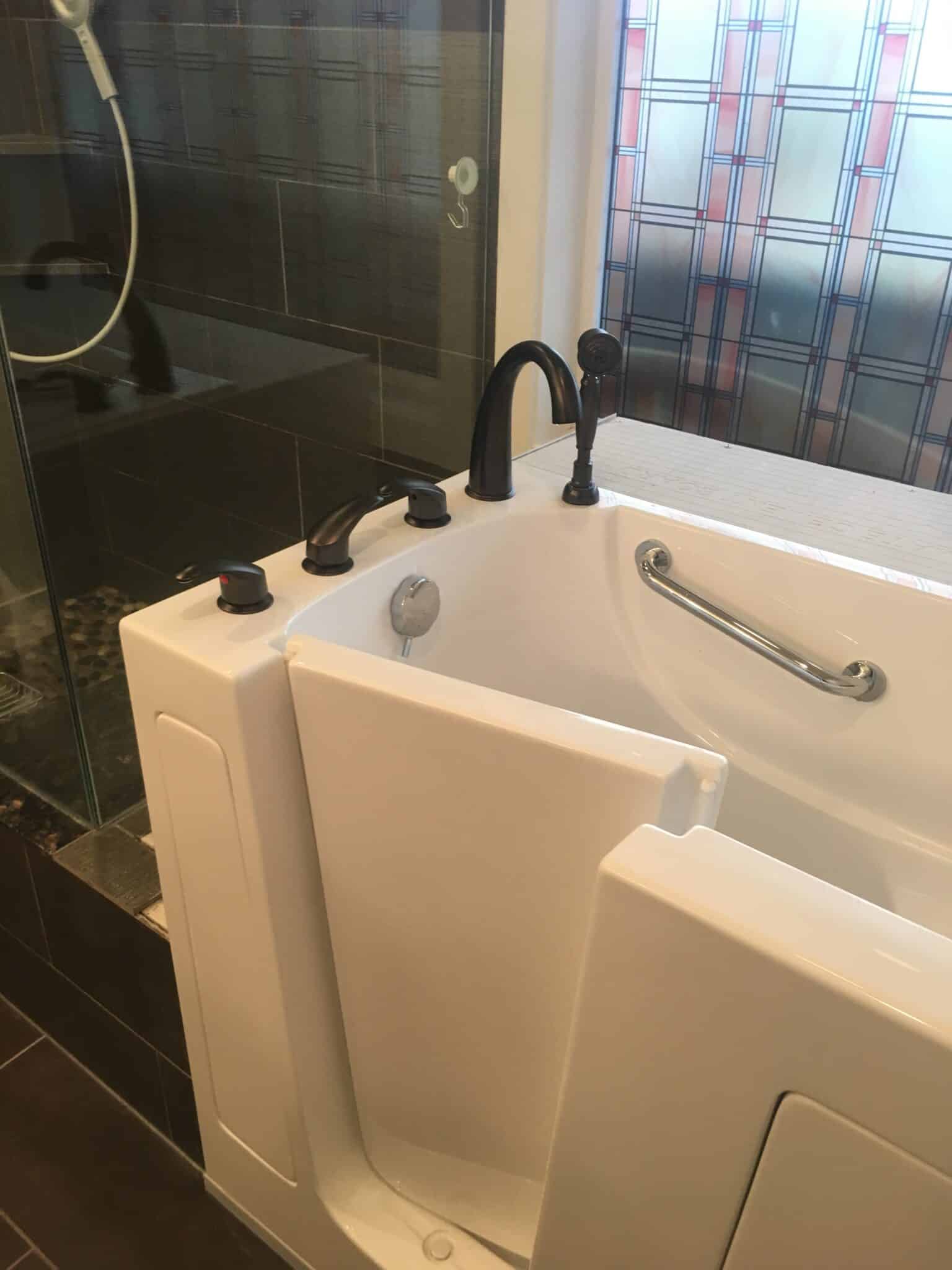
Walk in tubs are often chosen by seniors who love soaking, have chronic stiffness, or prefer seated bathing for the full routine. Many walk in tubs include hydrotherapy options that feel soothing and comforting.
- Ideal for those who prefer soaking rather than standing
- Seated bathing can be easier for low energy days
- Hydrotherapy features can be a major comfort benefit
- A good fit when the bathroom layout supports the tub size
Want to compare walk in tubs quickly? Visit walk in tubs on AgingSafelyBaths.com.
Many households choose a shower upgrade first because it supports daily routines and easier caregiver assistance. Others choose a walk in tub because soaking is part of the person’s comfort and relaxation. If you want, we can ask a few quick questions and narrow your best options in minutes. Call 1-888-779-2284 (BATH) or submit the form below.
Design Details That Make Senior Showers Feel Better Every Day
The difference between a shower that looks good and a shower that feels good is usually a handful of small design decisions. This section breaks down what tends to matter most for elderly comfort, predictable movement, and day-to-day usability.
Reachable controls and simple temperature adjustments
Controls should be reachable without stretching, twisting, or stepping deeper into the shower. If the shower will be used seated, consider a layout where the person can reach the water controls from the seat.
It can also help to position controls so the user can turn on the shower while standing outside the main spray path. That reduces the “shock” feeling when first starting water.
Handheld shower heads and flexible spray options
A handheld shower head can support seated showering and caregiver assistance. It also helps people rinse without bending. For seniors, bending and twisting can be uncomfortable, and sometimes creates balance problems.
Pairing a handheld head with a fixed head gives flexibility. The goal is to match the person’s routine, not just install a trendy fixture.
Storage and shelves at reachable heights
Soap and shampoo storage should not force awkward reaching. Built-in shelves can reduce bending. If multiple users share the shower, consider storage zones so items remain organized.
Keeping frequently used items within easy reach supports calmer movement and reduces rushed stepping.
Slip-resistant floors and predictable slope
A senior shower should feel stable underfoot. That comes from traction and from a slope that directs water without creating a “tilted floor” sensation. The best pans balance water flow with a surface that still feels natural to stand on.
If you have ever stepped into a shower and immediately felt like your footing changed, you know how important this is. For elderly users, predictable footing can reduce tension and make the shower feel more welcoming.
Grab bars planned around real movement
Grab bars work best when they align with how the person actually moves. One person might need support at the entry. Another needs a bar near the seat. Another needs a stable point while turning.
If you request a quote, tell us where the user feels unstable. We can suggest a support layout that matches the routine.
Cost and Budget Planning for Showers for Elderly Adults
Cost is often the biggest stress point. Most families want a clear range and a clear path forward without confusing add-ons. Pricing can vary by shower size, wall system, pan style, accessories, and installation needs.
What drives cost the most
The biggest cost factors are usually the size of the shower, the pan style (barrier free vs low threshold), and the wall system. Accessories like seating, grab bars, shelving, and upgraded drains can also affect budget.
- Size: larger footprints and wider roll in pans can increase materials cost.
- Pan style: barrier free and specialized drain solutions can raise complexity.
- Walls: premium wall finishes and built-in features can change the quote.
- Installation: subfloor, plumbing location changes, and bathroom condition can affect labor.
A smart approach is to pick the fundamentals first: entry feel, traction, support layout, and layout fit. Then choose finish upgrades once the functional design is locked in.
How to control budget without sacrificing comfort
Many seniors do not need every upgrade at once. The shower can be designed to be comfortable and usable, then enhanced over time. The most important budget choices often involve the pan and layout — because that is hard to change later.
- Choose a layout that fits the current bathroom footprint when possible.
- Prioritize traction, seating planning, and reachable controls first.
- Consider simple wall systems that are easy to clean and maintain.
- Install backing for future grab bars even if placement changes later.
If you share your ZIP code and rough timeline in the form below, we can recommend options that match your budget goals.
Free Quote: Showers for Elderly Adults, Senior Showers, and Roll In Shower Options
Use this form to request guidance on the best shower setup for your needs. We help families compare roll in showers, low threshold showers, and other senior shower options. The goal is clarity, not pressure.
If you prefer speaking with someone, call 1-888-779-2284 (BATH). We can discuss your space, your routine, and what you want the shower to feel like day to day.
Deep Dive: What Elderly Homeowners Ask Before Choosing a Senior Shower
The internet has a lot of generic content about “accessible showers.” What people really need is decision clarity. Here are practical questions families ask when they are choosing showers for elderly parents or planning a shower upgrade for themselves.
“Do we need a roll in shower, or is a low threshold enough?”
This is one of the most important questions. A low threshold shower is often sufficient when the person can step confidently, even if stepping is slower. A roll in shower is often the better fit when wheelchairs are involved, when a caregiver assists, or when the household wants to minimize future disruption.
If you are unsure, it is often better to lean toward flexibility. That does not mean every person needs a true barrier free build. It means the shower should feel easier now and remain usable later.
“Will the shower still look modern?”
Yes. Many senior showers use tile-style walls, clean lines, and simple shelving. The key is selecting finishes that feel like a modern bathroom rather than a hospital room. You can choose a neutral palette, warm lighting, and glass solutions that maintain a spa-inspired look while still supporting easier entry and steadier movement.
“What matters more: the seat, the grab bars, or the pan?”
The pan and entry set the foundation. Seating and grab bars complete the usability. If the entry feels stressful, the shower will not feel welcoming. If the seating is poorly placed or the support points are not where the user naturally reaches, frustration builds. The best outcomes happen when all three are planned together.
“Can we do this without a complicated remodel?”
Many tub-to-shower projects fit into the existing footprint. Complexity depends on subfloor condition, drain location, and layout preferences. A common path is to choose a shower system that fits the space well, then plan the upgrades like seating and support points in a way that matches the user’s routine.
“What should we do first if we are just starting?”
Start with measurements and routine. Measure the space. Think about how the person enters the shower, where they stand, whether they sit, and what feels difficult. Then request a quote so you can see options that match the space. Clarity reduces stress.
Submit the quote form above with your ZIP and a short note about your current shower or tub. We will suggest practical options for senior showers, roll in showers, and low threshold designs. If you prefer a call, dial 1-888-779-2284 (BATH).
FAQ: Showers for Elderly Adults, Senior Showers, and Roll In Shower Design
These are common questions people ask when researching showers for elderly homeowners. If you do not see your question here, call 1-888-779-2284 (BATH) or submit the quote form for help.
Do showers for elderly adults require a full bathroom rebuild?
Not always. Many senior shower upgrades use the same footprint as an existing tub or shower. The work depends on plumbing location, subfloor condition, and whether the design is barrier free or low threshold. We can help you evaluate the simplest path forward.
Are roll in showers only for wheelchair users?
No. Roll in showers can benefit many seniors who do not use a wheelchair. The easier entry and open layout reduce stress at the doorway, and they can support seated showering. They also make caregiver support easier when help is needed.
What is the difference between a low threshold shower and a barrier free shower?
A low threshold shower reduces the step height but still has a small curb or bevel. A barrier free shower aims for near-flush entry where the threshold is minimal or aligned with the floor. Both can be excellent. The best choice depends on mobility and layout.
Can senior showers still include glass doors?
Yes, depending on the layout. Some designs use a wider opening with a partial glass panel, while others use a door designed for easier access. The goal is to avoid a door swing that creates awkward movement or blocks entry.
Do you offer shower systems beyond elderly-focused designs?
Yes. If you are also comparing standard shower systems, visit our partner site Showers4Less.com for a wide range of shower packages and wall systems.
How quickly can we get a quote for showers for elderly parents?
If you submit the form with your ZIP code and a few notes about the current bathroom, we can follow up quickly with recommended directions. The more accurate your basic measurements and photos are, the easier it is to narrow options.
What are the most important upgrades for elderly shower comfort?
Most people benefit from easier entry, reliable traction, well-positioned seating, and support points that match natural movement. Reachable controls and a handheld shower head can also make daily bathing easier.
Can a low threshold shower work for a walker?
It can, depending on step comfort and balance. Many walker users prefer very low thresholds and strong traction. If a walker is used inside the shower, layout and drainage planning become more important.
Can we choose a design that still feels spa-like?
Yes. Senior showers can use tile-style walls, clean lighting, calm colors, and modern shelving while still supporting easier entry and steadier movement. The difference is that the design is planned around routine and reach, not just appearance.
Call 1-888-779-2284 (BATH) or submit the quote form above. We will help you compare roll in showers, low threshold showers, and senior shower layouts that match your bathroom.